
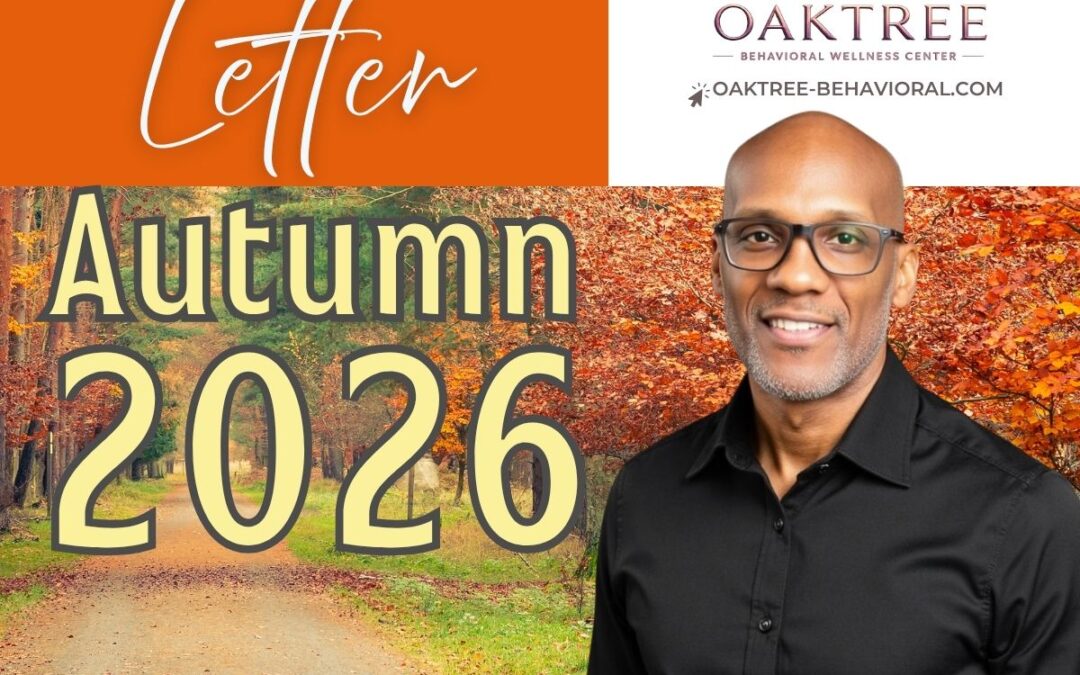
About The Author
Rodney D. Presley, LCSW, Founder, Oak Tree Behavioral Services, LLC
Rodney Presley is a licensed clinical social worker specializing in individual, couples, and men’s mental health therapy. His work focuses on helping people navigate anxiety, trauma, relationships, and life transitions with authenticity and balance.
At Oak Tree Behavioral Services, Rodney leads a team dedicated to supporting BIPOC individuals and families in finding emotional wellness and connection through therapy and education.
Love During Uncertain Times
The way we experience love as human beings is universal, although how we express it can vary.
The way we experience love as human beings is universal, although how we express it can vary. For many of us, we begin experiencing love shortly after we are born. We don’t know what it is or have words for it, but we recognize the feeling.
It might be the hug Grandma gives you every time she sees you. It might be hearing your loved one’s voice on the other end of the phone when you’re going through a difficult time. It could be your fur baby curling up next to you, completely content. Or maybe it’s the quiet satisfaction a dad feels late at night when everyone he loves is safely asleep.
The feeling may be difficult to put into words, but most of us know what it feels like.
How we express love is different. We each have our own ways of showing people we care, and sometimes those expressions are misunderstood—even by the people closest to us. If you know how you express love, I would challenge you to expand it. Find other ways to show the people in your life that they matter.
But what about the people on the outside?
How does your love for others show up? Is it a smile or a nod to someone you pass? A little more patience with someone who is taking too long? Is it giving someone a little more grace, knowing you have no idea what they may be carrying that day?
I don’t want this to sound too kumbaya-ish. Love and kindness aren’t going to solve everything happening in the world. But during uncertain times, I do believe we need to be kinder to one another.
Some people are really struggling, and you may never know it. The person you encounter at the grocery store, at work, in traffic, or walking down the street may be carrying something you know nothing about.
Your kindness may not change their circumstances, but it might change that moment for them. Maybe that’s one way we can practice love during uncertain times—not by trying to fix everything, but by being a little more intentional about how we treat one another.
Why Love Matters
When the world feels uncertain, it can be easy to become frustrated, impatient, fearful, or disconnected from one another. This is when love matters most. Love doesn’t make uncertainty disappear, but it can change how we move through it—and how we treat one another along the way.
- Love reminds us that we are not alone. Whether it comes from a partner, family member, friend, neighbor, or community, connection gives us somewhere to turn when life feels uncertain.
- Love asks us to slow down. A little more patience, a kind word, listening instead of immediately reacting, or simply giving someone the benefit of the doubt can make a difference.
Why Love Matters
- Love helps us carry difficult things together. We were never meant to handle everything alone. Supporting one another doesn’t always mean having the answers. Sometimes it simply means being present.
- Love keeps us connected to hope. Caring about someone—and knowing that someone cares about us—can remind us that there is still goodness in the world, even when it may be harder to see.
- Love helps us find our way back to one another. We will not always agree. We come from different backgrounds, have different experiences, and see the world differently. But we can still choose kindness, compassion, respect, and humanity.
When Uncertainty Increases Anxiety
I’ve talked about anxiety and uncertainty in a previous newsletter, so I won’t repeat everything here. But as uncertainty continues, it’s worth remembering that our minds and bodies can respond even when there is no immediate danger in front of us. We can find ourselves worrying about what might happen, checking for the latest information, feeling more on edge, or trying to control things that are simply outside of our control.
Here are five things you can do when you notice your anxiety increasing:
1. Pay attention to how much information you’re taking in. Staying informed is important, but constantly checking the news or social media can keep your mind and body on alert. Give yourself permission to step away.
2. Come back to what you can control. Ask yourself, “Is there something I can actually do about this right now?” If there is, do what you can. If there isn’t, recognize that continuing to worry won’t give you more control.
3. Get back into your body. Take a walk, exercise, stretch, breathe slowly, or simply step outside. Sometimes your body needs help settling before your mind can follow.
4. Stay connected. Spend time with people who help you feel grounded. Talk, laugh, eat together, take a walk, or simply be in the same space. Connection can remind us that we don’t have to carry uncertainty alone.
5. Make room for something that feels good. Listen to music. Watch something funny. Spend time with your pet. Cook. Read. Pray. Sit outside. Enjoying your life does not mean you are ignoring what is happening in the world.
Final Thoughts…
We may not be able to control what happens next, but we can pay attention to what we give our energy to, how we care for ourselves, and how we show up for one another.